I spent a decade in corporate operations watching people drown in “aesthetic” presentations that were essentially just expensive, hollow shells. I’ve seen brilliant professionals lose out on massive contracts because they spent three weeks obsessing over website fonts and custom animations instead of actually showing their work. Most of the advice you find online about how to build a portfolio is designed to sell you a subscription to a fancy site builder or a $500 masterclass, when in reality, most of that is just performative busywork. If your portfolio doesn’t solve a problem or demonstrate a result, the prettiest layout in the world won’t save you.
I’m not here to teach you how to win a design award; I’m here to show you how to build a tool that actually works. We are going to strip away the fluff and focus on a battle-tested system for selecting, organizing, and presenting your most impactful wins. I’ll show you how to curate your best projects so they communicate your value in seconds, not minutes. Let’s get your work in front of the right people without wasting your entire weekend on pixel-perfect nonsense.
Table of Contents
Curating Best Projects Instead of Dumping Every File

The biggest mistake I see people make is treating their portfolio like a digital junk drawer. They think more is better, so they upload every PDF, every draft, and every minor task they’ve ever completed. This is a massive waste of your time and, more importantly, the reader’s time. When you dump everything into a folder, you aren’t demonstrating expertise; you’re demonstrating a lack of judgment. Instead of curating best projects that reflect where you want to go next, you’re anchoring yourself to where you used to be.
Think of your portfolio as a highlight reel, not a raw data dump. If you’re looking at various portfolio website examples for inspiration, notice how the best ones feel curated and intentional. You only need three to five solid pieces that prove you can solve specific problems. I’d rather see one deep-dive portfolio case study structure that shows your logic and process than twenty mediocre files that show nothing but the final result. Pick the work that makes you proud, and leave the rest in your archives.
The Portfolio Case Study Structure That Saves You Time
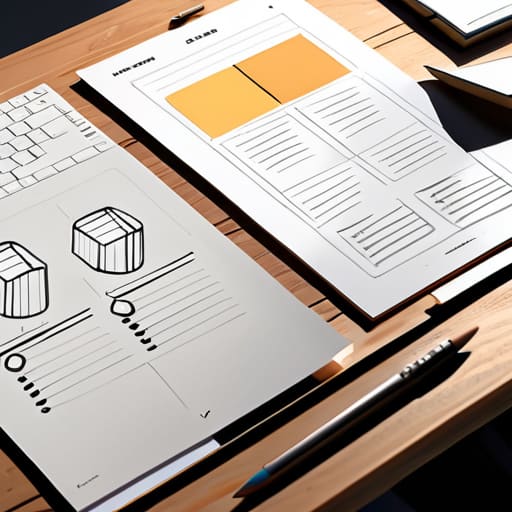
Most people approach their portfolio like a scrapbook, which is a massive waste of time. If you just show a finished product without context, you aren’t actually proving you can do the job; you’re just showing you can finish one. To avoid this, I use a rigid portfolio case study structure that focuses on the “why” rather than just the “what.” Instead of a wall of text, break each project into three quick beats: the problem you were handed, the messy middle where you solved it, and the final result.
This method is about demonstrating your thought process. When you are showcasing creative work, a hiring manager doesn’t just want to see a pretty graphic or a clean line of code; they want to see how you handle a deadline or a shifting brief. Keep your descriptions punchy. Use bullet points for your specific contributions and avoid the urge to write a novel. If you can explain a complex solution in three short paragraphs, you’ve already proven you have the communication skills necessary for a high-level role.
Five Ways to Stop Overthinking and Start Publishing
- Stop waiting for a “perfect” website. If you’re stuck in the weeds of choosing between Squarespace, Wix, or a custom build, just use a clean Notion page or a simple PDF for now. The platform is just the container; the work inside is what gets you hired.
- Build for the person who has five minutes to spare. Most hiring managers aren’t going to click through a complex, interactive labyrinth to find your data. Use clear headings and high-contrast visuals so they can grasp your value proposition while they’re sipping their second coffee.
- Write like a human, not a brochure. I see too many portfolios filled with corporate buzzwords like “leveraged synergies” or “optimized workflows.” Tell me what actually happened: “The client was losing money, I fixed the bottleneck in their shipping process, and we saved 12% in Q3.”
- Include the “ugly” middle parts. A finished, polished result is fine, but showing a messy sketch, a failed spreadsheet, or a pivot you had to make mid-project proves you can actually navigate real-world friction. That’s where the real skill lives.
- Test your links on a Tuesday morning. It sounds trivial, but nothing kills professional credibility faster than a “404 Error” on your most important project link. Check your buttons, your contact form, and your resume download once a month—set a recurring calendar invite if you have to.
The Bottom Line
Stop treating your portfolio like a digital junk drawer; if a project doesn’t clearly demonstrate a specific skill you want to be hired for, leave it out.
Focus on the “how” and the “why” of your work rather than just the finished product, because employers want to see your problem-solving process, not just a pretty screenshot.
Build a repeatable template for your case studies so you aren’t reinventing the wheel every time you finish a new project.
The Truth About Showcasing Your Work
Your portfolio isn’t a digital attic where you store every scrap of work you’ve ever done; it’s a curated showroom designed to prove you can solve a specific problem. If a project doesn’t clearly demonstrate your ability to deliver results, it’s just noise, and noise is the fastest way to lose a hiring manager’s attention.
Diane Sterling-Voss
Stop Polishing and Start Shipping
At the end of the day, a portfolio isn’t a museum of everything you’ve ever done; it’s a curated toolkit designed to prove you can solve a specific problem. You don’t need fifty mediocre examples cluttering up your site. You need three or four battle-tested case studies that clearly demonstrate your logic, your process, and your results. Remember: focus on the quality of the narrative rather than the quantity of the files. If you can show how you navigated a mess and came out with a solution, you’ve already done more than 90% of the people out there just dumping screenshots into a folder.
Don’t let the pursuit of a “perfect” site become another way to procrastinate on actually doing the work. Your portfolio is a living document, not a static monument. It’s okay if it’s not aesthetically flawless as long as it is functionally clear. Get your best work online, let it breathe, and then get back to your actual job. The best way to improve a portfolio isn’t by tweaking the font for three hours; it’s by finishing another great project that you can eventually add to the mix. Now, close the tabs and go get something done.
Frequently Asked Questions
I don't have any "big" professional projects yet; can I still build a portfolio using freelance or personal work?
Listen, I’ve seen plenty of people stall because they’re waiting for a “real” corporate title to validate their work. That’s a trap. If you’ve done a freelance gig for a local bakery or even built a complex automation script for your own home office, that counts. The goal isn’t to show off a Fortune 500 logo; it’s to demonstrate your process. Show me how you identified a problem and solved it. That’s what matters.
How much time should I actually spend on the visual design of the site versus the actual content?
Look, I get the temptation to spend three days picking the perfect hex code for your buttons, but stop. Unless you’re a UI designer, your portfolio is a proof of concept, not a high-end art installation. Aim for an 80/20 split: spend 20% of your time on a clean, readable layout and 80% on the substance of your case studies. If the content is brilliant, people won’t care if your font is slightly off.
Is it better to host my portfolio on a dedicated website or just keep everything in a clean, shareable PDF?
Look, if you’re applying for creative roles, you need a website. It’s your digital storefront. But for most operations or business roles, a clean, hyper-focused PDF is actually superior. Why? Because it’s predictable. I can open a PDF, scan your results in thirty seconds, and move on. A website with slow loading times or a confusing UI is just friction. Pick the medium that gets your best work in front of eyes the fastest.