I spent most of my twenties thinking that building good habits required a complete personality transplant and a $50 leather-bound journal. I used to buy into the hype—the idea that if I just woke up at 4:00 AM and followed a rigid, ten-step morning ritual, my life would suddenly snap into perfect alignment. But let’s be honest: most of those “productivity gurus” have never had to manage a crumbling supply chain or a household during a flu season. Their advice is designed for people with infinite time and zero real-world friction, not for the rest of us trying to stay afloat during a chaotic Tuesday afternoon.
I’m not here to sell you on a lifestyle overhaul that leaves you exhausted by Wednesday. Instead, I want to talk about low-friction systems that actually stick when your willpower is running on empty. I’m going to share the battle-tested methods I’ve used to streamline my own life, focusing on small, incremental shifts rather than grand, unsustainable gestures. We aren’t aiming for perfection; we’re aiming for functional efficiency that saves you mental bandwidth for the things that actually matter.
Table of Contents
The Neuroscience of Habit Formation Without the Fluff
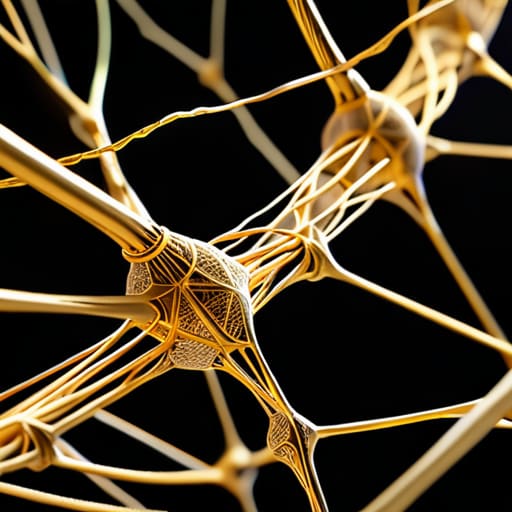
Look, I’m not a neuroscientist, and I’m certainly not here to lecture you on synaptic plasticity. But understanding the basic mechanics of how your brain operates can save you a lot of frustration when a new routine inevitably falls apart. At its core, the neuroscience of habit formation isn’t about willpower; it’s about efficiency. Your brain is a biological energy-saver. It wants to take any repetitive action and turn it into an automated script so it can stop thinking about it.
This happens through what’s essentially a cue-routine-reward loop. You see a trigger (the cue), you perform the action (the routine), and your brain gets a tiny hit of dopamine (the reward). If you try to fight this by sheer force of will, you’ll lose every time—especially around 4:00 PM on a rainy Thursday. Instead of fighting your biology, we need to work with it. The goal isn’t to reinvent your entire identity; it’s to reprogram the loop by making the cues obvious and the rewards immediate. Once that circuit is closed, the behavior stops being a choice and starts being an autopilot function.
Using Atomic Habits Principles for a Messy Tuesday

Most productivity gurus act like life happens in a vacuum of perfect discipline, but we both know that’s a lie. When you’re staring at a mountain of emails at 3:00 PM and your brain feels like lukewarm porridge, you aren’t going to summon the willpower to overhaul your entire existence. This is where applying atomic habits principles actually matters. Instead of trying to revolutionize your life, you need to focus on the smallest possible unit of progress. If your goal is to drink more water, don’t commit to a gallon a day; just commit to drinking one glass immediately after you finish your morning coffee.
The secret to making this stick without the mental strain is the habit stacking method. You take a behavior you already do—like checking your physical planner or waiting for the kettle to boil—and tether a new, tiny action to it. You aren’t fighting your biology; you’re piggybacking on it. By anchoring a new movement to an existing cue routine reward loop, you remove the need for decision-making. When the day gets messy, you don’t need a complex strategy; you just need a system that requires almost zero cognitive load to execute.
Five Low-Friction Systems for When Life Gets in the Way
- Anchor your new habit to something you already do without thinking. Don’t try to “find time” for a new routine; just tack it onto the end of your morning coffee or the moment you close your laptop for the day. If it isn’t attached to an existing trigger, it’s just a wish.
- Shrink the barrier to entry until it feels almost insulting. If you want to start reading more, don’t aim for thirty pages; aim for one paragraph. The goal isn’t the volume of work; it’s the preservation of the streak. You can always do more once you’ve started, but you can’t do more if you never pick up the book.
- Audit your environment to remove the “decision fatigue” tax. If you want to eat better, stop keeping the junk in the pantry just because it’s there. If you want to work out, set your clothes out the night before. Make the right choice the easiest choice in the room.
- Stop aiming for perfection and start aiming for “never missing twice.” Life happens—a deadline runs late, a kid gets sick, or you’re just plain exhausted. Missing one day is an accident; missing two is the start of a new, bad habit. Get back on the rails immediately.
- Use a physical tracker to create a tangible feedback loop. There is something about physically crossing an item off a paper planner that hits differently than a digital notification. It provides a small, quiet sense of completion that keeps your brain engaged without the dopamine overload of an app.
The Bottom Line for Your Tuesday Afternoon
Stop looking for the “perfect” routine. A mediocre habit you actually do is infinitely more valuable than a flawless system that sits in your planner gathering dust.
Focus on reducing friction, not increasing willpower. If you want to work out, put your shoes by the door; if you want to eat better, stop buying the snacks that sabotage you.
Build for your worst days, not your best ones. A sustainable system is one that still works when you’re exhausted, stressed, and running on four hours of sleep.
The Truth About Consistency
Stop looking for a grand transformation and start looking for the path of least resistance; a habit isn’t a victory of willpower, it’s just a system that’s too easy to ignore.
Diane Sterling-Voss
Stop Overthinking and Just Start

At the end of the day, building habits isn’t about achieving some state of perfect, robotic discipline. It’s about understanding that your brain needs a predictable path to follow when your willpower inevitably hits a wall. We’ve looked at how the neuroscience actually works, stripped away the fluff, and applied those principles to the actual chaos of a workday. You don’t need a complete lifestyle overhaul or a dozen new apps to see progress. You just need to focus on reducing friction and making the right choice the easiest choice available to you. If you can automate even one small, repetitive task or decision, you’ve already won half the battle.
My advice? Stop waiting for the “perfect” Monday to begin your transformation. Perfection is a productivity killer that keeps you stuck in the planning phase while life happens around you. Instead, aim for consistent imperfection. If you miss a day, don’t scrap the whole system; just show up again the next morning. The goal isn’t to become a different person, but to build a set of reliable systems that support the person you already are. Now, close this tab, put down the phone, and go do that one small thing you’ve been putting off.
Frequently Asked Questions
How do I keep these habits from falling apart when my schedule inevitably blows up?
When the schedule collapses, you don’t abandon the system; you scale it back to its “minimum viable version.” If your habit is a 30-minute workout but you’re stuck in back-to-back meetings, do ten pushups. If you can’t meal prep, eat a rotisserie chicken. The goal isn’t perfection; it’s maintaining the neural pathway. Don’t let a bad day turn into a bad week just because you couldn’t do the full routine.
I'm already overwhelmed; how do I add new systems without feeling like I'm just adding more chores to my list?
The mistake most people make is trying to “install” a new habit like it’s a software update. It’s not. If it feels like a chore, the system is broken. Stop looking for a grand overhaul and start looking for “habit stacking.” Don’t add a new task; anchor it to something you already do without thinking—like brewing coffee or checking your mail. If it doesn’t fit into your existing flow, don’t do it.
At what point do I stop focusing on the small "atomic" steps and start looking at the bigger picture?
You stop when the friction of the small steps starts feeling like a chore rather than a tool. If you’re spending more time tracking your “micro-wins” than actually doing the work, you’ve over-engineered the system. Once a small habit becomes automatic—meaning you do it without checking your planner or debating it—stop optimizing it. That’s your cue to zoom out, look at the macro goal, and start building the next layer of the system.